

The best LinkedIn comments add something the original post didn't already say. A concrete example, a follow-up question, a small disagreement backed by real experience. That's it. Generic praise like "Great post!" gets treated by LinkedIn's algorithm the same way it gets treated by humans: ignored.
If you want your comments to drive profile views, start conversations, and build your network, the format matters as much as the intent. Here's what works, why it works, and how to do it consistently.

15 Examples of Good LinkedIn Comments (and Why They Work)
The following examples cover the most common post types you'll encounter. Each one follows a principle: react, add specific value, optionally ask.
On a thought leadership post (agreement + detail):
- "Strong point about hiring velocity. The part that stood out to me is how fast weak communication compounds when the team grows. We saw this firsthand when scaling from 20 to 60 people last year."
On a thought leadership post (extension):
- "I agree with this, especially for early-stage teams. What made the biggest difference for us was documenting processes earlier than felt necessary. Saved us months of rework."
On a thought leadership post (respectful counterpoint):
- "Interesting take. I mostly agree, though I think this changes once a company crosses a certain size because the coordination cost becomes much higher. Curious if you've seen that pattern too."
These three formats, which research identifies as agreement-plus-detail, extension, and respectful counterpoint, build authority and invite replies without sounding forced.
On an industry news post:
- "This acquisition is particularly significant given the recent regulatory changes in fintech. I'm curious to see how they'll navigate the compliance challenges that smaller players have been struggling with since Q2."
On a market data or research post:
- "These findings align with what we've been seeing with clients in the SaaS space. The correlation between onboarding speed and 90-day retention is especially striking. Does anyone have visibility into how company size affects this?"
On a personal milestone (new job or promotion):
- "Huge congrats on the VP role at [Company], Sarah. Knowing how hard you pushed on the enterprise sales rebuild last year, they've made a great call."
On a work anniversary:
- "Year five already? The way you've shifted into product strategy over the last 18 months has been genuinely impressive to watch."
On a how-to or educational post:
- "Step three is the one most people skip. We learned that the hard way when rolling out async workflows across time zones. The other thing I'd add: document the exceptions before you document the rules."
On a personal story or vulnerable share:
- "Reading this on a Tuesday morning and it hit. The line about 'performing confidence you don't feel' in particular. Thanks for putting this out there."
On a question or request for input:
- "We tackled this exact challenge last quarter. The approach that worked best: start with the smallest viable scope, measure one metric only, then expand. Happy to share more detail if useful."
On a hot take or contrarian post:
- "Saved this. The point about founder-led sales being a liability past Series B is the one nobody wants to say out loud. What's your read on when exactly the handoff should happen?"
On a post sharing an article:
- "Thanks for sharing this, [Name]. The section on async communication was especially relevant given the distributed team challenges we've been discussing internally. The author's point about calendar debt is one I hadn't heard framed that way before."
On a post you disagree with:
- "Interesting perspective. I'd offer a clarification on the retention figures. The studies I've seen segment by company size, and the pattern looks quite different for teams under 50. Does the data here control for that?"
On a post asking for recommendations:
- "From my experience as a product manager, three factors tend to determine this: how fast the team iterates, how clearly success is defined upfront, and whether stakeholders are aligned before kickoff, not after. Happy to elaborate on any of these."
On a post celebrating a company milestone:
- "As someone who worked with [Company] during their early growth phase, I can say this milestone reflects exactly the kind of consistency their team brings to every project. Well earned."
Every one of these comments adds value by sharing insight, asking a question, or referencing something specific from the post. None of them could be copy-pasted unchanged onto a different post and still make sense.
Why commenting matters for your LinkedIn growth

LinkedIn's algorithm treats comments as a stronger engagement signal than likes or reactions. A comment, especially one that generates a reply, tells the platform that a post sparked a real conversation. That post then gets distributed to more people, and your name appears in that expanded reach.
The practical effect: when you leave a high-value comment on a post from a high-reach profile, your comment gets seen by everyone who views that post. That's borrowed reach. You didn't have to create the content, but you show up in the feed of people who follow the original poster.
Comments also build professional authority faster than most people realize. Showing up consistently in the right conversations signals expertise to people who've never visited your profile. Over time, that visibility compounds into inbound connection requests, DMs, and client conversations.
Basic principles for writing comments that hold up
A few fundamentals separate comments that get noticed from ones that disappear.
- Read the full post before commenting. Responding to only the headline is obvious and embarrassing. The best comments reference something specific from the body of the post.
- Keep it to 2–4 sentences. Comments over 10 words receive more algorithmic weight than short reactions, but a wall of text loses readers. Two tight sentences with a real observation outperform a paragraph of restated points.
- Add something new. A data point, a personal example, a question, a small disagreement. If your comment could have been written without reading the post, delete it and start over.
- Use a professional but human tone. Formal enough to be taken seriously, personal enough to sound like a real person wrote it.
- Avoid generic openers. "Great post!" "So true!" "This is so important!" These phrases signal to both the algorithm and the reader that you didn't engage with the content.
- Ask one specific question when it fits. Questions pull the original poster back into the thread, and nested replies carry significant algorithmic weight in LinkedIn's current ranking system.
Pro Tip: Before you post, ask yourself: could this comment appear unchanged on a completely different post? If yes, rewrite it with one specific detail from the actual content.
Tips for writing comments that drive higher engagement
Timing is the first lever most professionals ignore. Commenting within the first 60 minutes of a post going live increases your visibility significantly because LinkedIn's algorithm weights early engagement heavily. If you're targeting specific creators or decision-makers, set a notification for their posts.
- Engage early. The first hour after a post goes live is when your comment gets the most exposure.
- Match the post's energy. A vulnerable personal story calls for a short, human response. A data-heavy thought leadership post calls for a substantive addition.
- Extend, don't just agree. Take the original idea one step further with an example, a nuance, or a case the post didn't cover.
- Use @mentions strategically. Tagging the post author in your comment increases the chance they'll respond, which extends the thread and your visibility.
- Reply to replies. When someone responds to your comment, reply back. Each exchange deepens the thread and keeps your name in the notification feed.
- Aim for 5–8 comments per day on posts from your target audience or industry thought leaders. Quality over volume, but consistency over weeks and months is what produces results.
Pro Tip: Build a short list of 10–15 high-reach profiles in your industry and check their posts every morning. Commenting on the same people's posts regularly gets you recognized as a consistent, thoughtful voice in their community, which is worth more than one viral comment.
Common mistakes that kill your LinkedIn commenting strategy
Most professionals know what a good comment looks like in theory. The mistakes happen when they're moving fast.
- "Great post!" and its variants. Generic praise without specifics is invisible to the algorithm and forgettable to humans. It piles up in the dozens on any popular post and blurs together.
- Self-promotional comments. "We actually solve this problem at my company…" actively damages your reputation. You're hijacking someone else's post to sell, and readers notice.
- One-word replies. "Agreed." "Exactly." "Facts." These read as reactions, not comments, and receive no algorithmic boost.
- Off-topic responses. Commenting on a post about leadership with a question about your own product launch is tone-deaf. Stay on the post's subject.
- Confrontational or negative tone. Negative comments damage visibility and reputation, even when the underlying point is valid. Disagreement works when it's calm, specific, and respectful.
- Restating the post in different words. This is the subtler mistake. If your comment just summarizes what the author already said, you've added nothing. The algorithm reads it as low-signal.
When to comment and how to match the post type
Not every post calls for the same kind of comment. Getting the context right is what separates a comment that lands from one that reads as tone-deaf.
- Personal milestones (new job, promotion, anniversary): Reference something concrete. The company, the role, a project you remember. Two specific sentences will outperform a hundred "Congratulations!" replies in both human response and algorithmic weight.
- Thought leadership posts: Add a concrete example from your experience, push back on a specific point, or extend the framework to a case the post didn't cover. Don't restate the main point in different words.
- How-to or educational posts: Add a real example, a missing nuance, or a step that most people skip. Practical additions are the most valued here.
- Personal stories or vulnerable shares: Be human and brief. A short, genuine response that references a specific line from the post will mean more than a long analytical reply.
- Questions or requests for input: Give a direct, structured answer. Numbered steps work well here. Offer to elaborate if useful.
- Hot takes or contrarian posts: Engage with the specific claim, not the general topic. Save the post if it's genuinely useful, and say why.
What the data says about which comment types actually perform
Not all comments carry equal weight. The pattern is consistent: comments that add personal experience or ask thoughtful questions outperform every other format.
| Comment type | Visibility | Relationship building |
|---|---|---|
| Adds personal data or experience | High | High |
| Asks a thoughtful follow-up question | High | High |
| Agrees and adds a small point | Medium | Medium |
| Shares a relevant resource or link | Medium | Medium |
| "Great post!" or emoji-only reaction | Low | Low |
| Generic agreement ("So true!") | Low | Low |
| Self-promotional pitch | Low | Negative |
The top two formats do the heavy lifting. They demonstrate expertise, invite conversation, and signal to the poster that you're someone worth knowing. The bottom three are noise, and the self-promotional comment actively works against you.
Consistent, quality commenting drives profile views and pipeline conversations better than reactive, ad-hoc engagement. One comment that adds a real insight or personal experience does more for your visibility than twenty generic reactions. The professionals who see the most traction from commenting treat it as a daily habit, not an afterthought.
Pro Tip: Track which of your comments generate replies or likes over a two-week period. You'll quickly spot which formats resonate with your specific audience, and you can double down on those.
Comments that build real professional relationships
The comments that turn into actual relationships share one quality: they make the recipient feel specifically seen, not just acknowledged. Generic congratulations pile up on any popular post. A comment that references a real detail stands out immediately.
LinkedIn comments that build relationships often reference specific skills, projects, or contributions rather than offering broad praise. Here are formats that work:
- "Your work on the [specific project] last year was the kind of thing that gets noticed. This role is a natural next step."
- "I've been following your writing on supply chain resilience for about six months. The framework you laid out in this post fills a gap I hadn't seen addressed clearly before."
- "We haven't connected directly, but your perspective on [specific topic] has come up in two separate conversations I've had this week. Worth saying."
- "I've been on both sides of this situation. When working in a startup context, [approach A] was clearly more effective. In a larger org, [approach B] yielded better results. The determining factor was team autonomy."
These comments work because they demonstrate that you paid attention. That's rarer than it sounds on LinkedIn, and people remember it.
How to respond to replies on your comments
Most professionals post a comment and walk away. That's leaving the most valuable part of the interaction on the table. When someone replies to your comment, they've signaled genuine interest. How you respond determines whether that turns into a real connection.
Reply within a few hours when possible. A prompt response shows you're engaged, not just broadcasting. Keep your reply focused: acknowledge what they said, add one new thought, and optionally ask a follow-up question. Don't just say "Thanks for sharing!" That's the same mistake as the original generic comment.
If the reply opens a genuine conversation, move it forward. Ask a specific question, share a resource, or suggest connecting directly if the topic warrants a longer exchange. The goal is a thread with three or four exchanges, not a one-and-done acknowledgment. LinkedIn's algorithm weights nested replies heavily, so a back-and-forth conversation in your comment thread extends the reach of the original post and keeps your name visible.
When you get pushback or a counterpoint, engage with it directly. Acknowledge the specific point they raised, explain your reasoning, and stay curious rather than defensive. The professionals who handle disagreement well in public comment threads build credibility faster than those who only engage with agreement.
How to tailor comments to different industries and audiences
The format of a good comment stays consistent across industries. The content has to shift.
In finance and legal, precision matters more than personality. Reference specific regulations, frameworks, or market conditions. Vague observations read as uninformed. A comment on a post about SEC disclosure requirements should cite a specific rule or recent enforcement action, not a general sentiment about compliance.
In technology and SaaS, concrete product or engineering examples carry weight. Naming a specific tool, architecture decision, or metric you've worked with signals real experience. "We saw this with our Kubernetes migration last quarter" lands differently than "I've seen this pattern before."
In marketing and creative fields, voice and originality matter. A comment that sounds like everyone else's is worse than no comment at all. Take a specific angle, use a concrete example, and don't be afraid to have a point of view.
In healthcare and life sciences, cite sources and stay measured. Overclaiming or generalizing from limited experience can damage credibility fast in a field where precision is professional currency.
Across all industries, match the register of the original post. A casual, conversational post from a founder sharing a personal lesson calls for a different tone than a formal industry analysis from a research institution. Reading the room is a skill, and it shows.
For a deeper look at LinkedIn engagement strategies that go beyond commenting, the principles of consistency and specificity apply across every format on the platform.
Key Takeaways
The most effective LinkedIn comments add something the original post didn't cover, whether that's a personal example, a follow-up question, or a specific observation that shows you actually read the content.
| Point | Details |
|---|---|
| Add something new | Every comment should include a data point, personal example, or question not already in the post. |
| Comment early | Engaging within the first 60 minutes of a post going live increases your visibility due to LinkedIn's ranking algorithm. |
| Avoid generic praise | "Great post!" and similar phrases receive low algorithmic weight and are forgettable to human readers. |
| Match the post type | Milestones call for specific congratulations; thought leadership calls for extension or respectful counterpoint. |
| Reply to replies | Responding to comments on your comments deepens threads and keeps your name visible in the feed. |
Put your LinkedIn commenting on autopilot with Echoza
Writing great comments every day takes time, and most professionals don't have it. Echoza drafts personalized comments in your voice, based on your style and past activity, so you can review and approve before anything goes live.
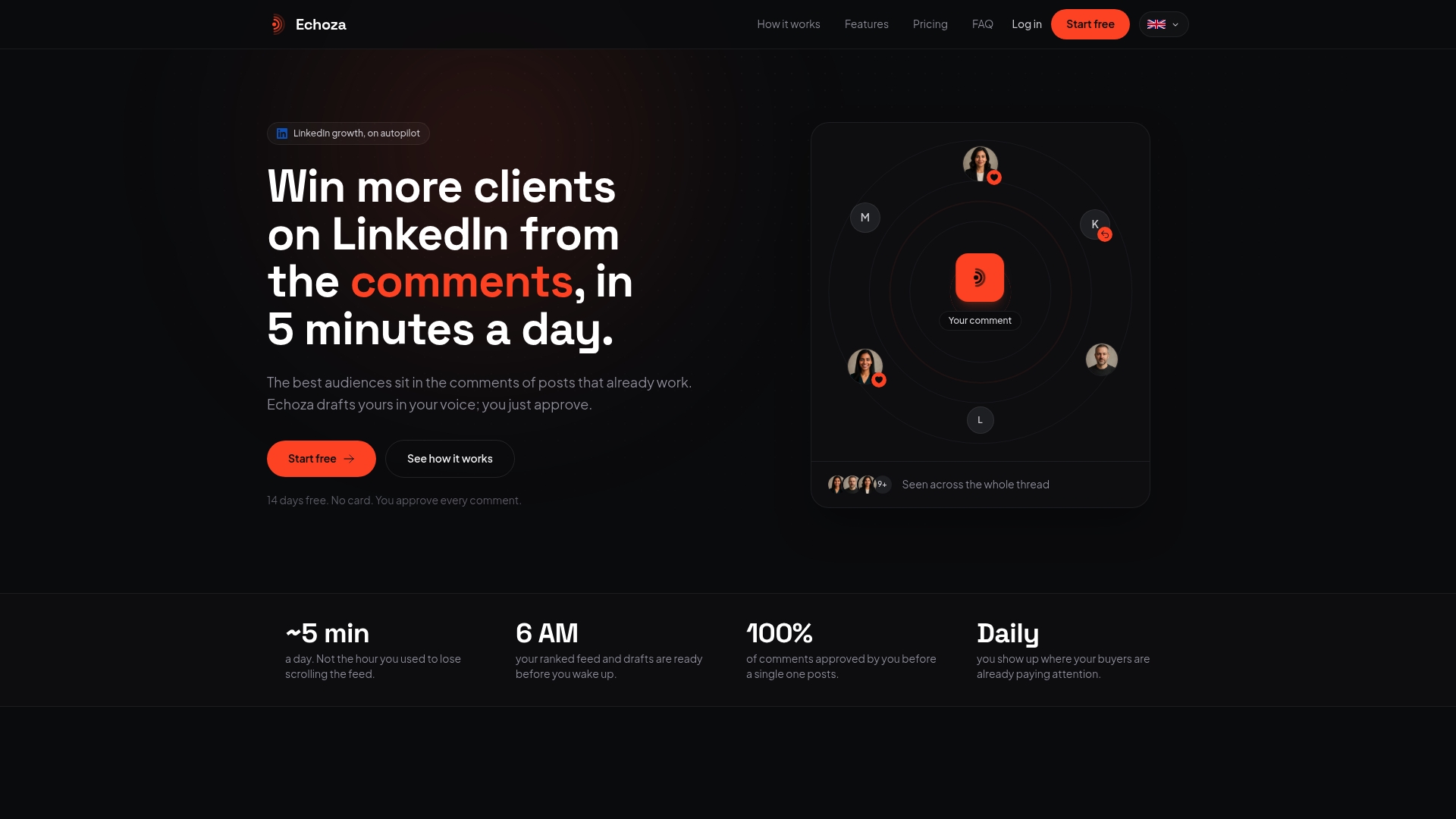
Echoza ranks your feed to surface the highest-impact posts, schedules approved comments across working hours, and manages daily activity caps so your engagement looks natural. No generic automation. Every comment sounds like you, because you approve it first.
Start winning clients from your comments with Echoza's free trial.