

LinkedIn engagement is defined as the sum of reactions, comments, shares, and dwell time your content earns from other users on the platform. Getting more of it is not about posting more often. It is about posting smarter, responding faster, and showing up in the right conversations. LinkedIn's 2026 algorithm now weighs Depth Score and conversation quality above simple reaction counts, meaning a post with ten substantive comments outperforms one with a hundred quick likes. Professionals who understand this shift gain a measurable visibility advantage over those still chasing vanity metrics.
How to get more engagement on LinkedIn: start with the right format
The format you choose determines how long people spend with your content. Native document carousels average 6.6%–7% engagement rates in 2026, the highest of any post type. That number exists because users swipe through 8–10 slides, generating extended dwell time that LinkedIn's algorithm reads as a signal of quality.
Rotating content formats such as carousels, text posts, and native video consistently outperforms accounts that rely on a single content type. The algorithm rewards variety because it signals an active, audience-aware creator. Accounts that mix formats also maintain follower interest longer, which compounds reach over time.

| Format | Avg. engagement rate | Best use case |
|---|---|---|
| Native document carousel | 6.6%–7% | Step-by-step guides, frameworks |
| Multi-image post | Moderate | Behind-the-scenes, event recaps |
| Short text post | Variable | Hot takes, personal stories |
| Native video | Moderate to high | Tutorials, live commentary |
Pro Tip: Rotate your format every post. If you published a carousel on Tuesday, publish a short text post next. Predictable variety keeps your audience engaged and your algorithm signals fresh.
How can outbound commenting increase your LinkedIn engagement?
Outbound commenting is the practice of leaving substantive, value-adding comments on other people's posts before and after you publish your own content. Outbound commenting drives 15 times more reach than passive posting alone. That multiplier comes from visibility inside threads your target audience is already reading.
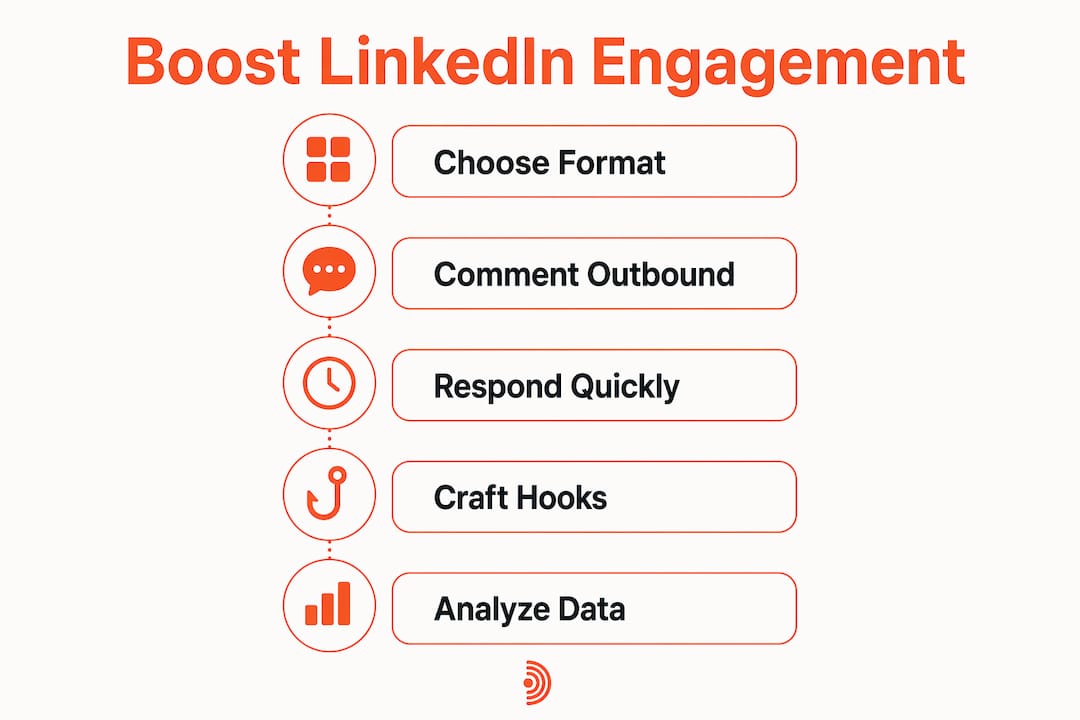
The key word is "substantive." A comment that reads "Great post!" contributes nothing to your visibility or reputation. A comment that adds a counterpoint, shares a relevant data point, or asks a follow-up question positions you as a credible voice in the conversation.
The best ways to engage on LinkedIn through outbound commenting include:
- Comment before you post. Spending 15–20 minutes commenting on target posts before publishing your own content warms up your network and primes the algorithm to distribute your post.
- Add a specific insight. Reference something concrete from the original post and build on it. Generic praise gets ignored.
- End with a question. Open-ended questions invite the original poster and other readers to reply, extending the thread and your visibility.
- Target the right posts. Focus on content your ideal clients or collaborators are already engaging with, not just the most popular posts in your feed.
- Avoid engagement bait. Comments designed purely to get reactions without adding value can hurt your credibility and algorithmic standing.
Pro Tip: Block 15 minutes every morning specifically for outbound commenting. Treat it as a non-negotiable part of your LinkedIn routine, not an afterthought.
What is the importance of responding quickly to comments on your posts?
Speed matters more than most professionals realize. Responding to every comment within the first 1–2 hours after publishing doubles the post's visibility. LinkedIn's algorithm reads active discussion threads as a signal of high-quality content and pushes that content to a wider audience.
The first 60–90 minutes after publication are the most critical window you have. Every reply you post inside that window extends the thread, increases dwell time, and signals conversation quality to the Depth Score metric. Missing that window means the algorithm moves on to newer content.
Here is a practical system for managing comments effectively:
- Turn on LinkedIn notifications for your posts immediately after publishing. You need to know the moment someone comments.
- Block 30 minutes post-publication in your calendar. Treat this time as protected, the same way you would a client call.
- Reply with a follow-up question. Replies with follow-up questions drive longer comment threads, which directly increases your Depth Score.
- Acknowledge every commenter by name. Personalized replies feel more genuine and are more likely to prompt a second response.
- Pin your best comment. If a commenter adds exceptional value, pin their reply to keep the thread visible and reward quality engagement.
Pro Tip: Draft two or three follow-up questions before you publish your post. When comments arrive, you already have thoughtful responses ready to deploy instantly.
How to craft LinkedIn posts that invite meaningful engagement
The first two lines of your post determine whether anyone reads the rest. Strong hooks within the first 1–2 lines significantly increase "see more" clicks, and more clicks mean more dwell time and more comments. The hook is not decoration. It is the engine of your post's reach.
Effective hooks fall into three categories. Contrarian hooks challenge a widely held belief: "Most LinkedIn advice is wrong about posting frequency." Data-driven hooks lead with a specific number: "One comment type drives 15 times more reach than a standard post." Personal story hooks open with a moment of tension or surprise: "I lost a major client because I ignored my LinkedIn comments for 48 hours."
Writing structure matters as much as the hook itself. Short paragraphs, single-sentence lines, and generous white space make posts readable on mobile, where the majority of LinkedIn users scroll. Dense blocks of text cause readers to scroll past without engaging.
Ending your post with a specific, opinion-inviting question is the single most effective way to increase comments. Specific, opinion-based questions consistently outperform vague calls to action like "What do you think?" A question like "Which of these three formats has worked best for your audience, and why?" gives readers a clear, low-effort entry point to respond.
Building authentic relationships through content creates 45% more sales opportunities compared to hard-selling tactics. That figure reflects a simple truth: people buy from people they trust, and trust is built through consistent, genuine conversation, not promotional posts.
A few structural rules to follow:
- Write your hook in one or two short sentences, no more.
- Use line breaks between every 1–2 sentences in the body.
- Place any external links in the first comment, not the post body. External links in the post body reduce organic reach because LinkedIn prioritizes content that keeps users on the platform.
- End with one specific question, not a list of questions.
- Skip hashtags in the post body. Hashtags perform better in the comments and avoid visual clutter that reduces readability.
What are common mistakes that kill LinkedIn engagement?
Most low-engagement accounts share the same set of fixable problems. Identifying your specific mistake is faster than trying every tactic at once.
- Posting at the wrong time. Publishing when your audience is offline wastes your post's critical first-hour window. Tuesday through Thursday mornings between 8:00 AM and 10:00 AM consistently outperform weekend posts for B2B audiences.
- Ignoring comments. Failing to reply signals to the algorithm that your content is not generating real conversation. It also signals to your audience that you are not actually interested in them.
- Inconsistent posting schedule. Posting 3–4 times per week is the optimal frequency. Posting daily can cannibalize your own reach by splitting your audience's attention across too many posts.
- Relying on one content format. A feed full of identical text posts trains your audience to scroll past without stopping.
- Using low-value content. Repurposed content that adds no original perspective generates no original conversation.
"LinkedIn engagement success in 2026 depends on treating the platform as a conversation hub rather than a broadcast medium. Professionals who show up to listen and respond, not just publish, consistently outperform those who treat LinkedIn like a billboard."
Check your LinkedIn analytics weekly. Look at which posts generated the most comments, not just the most impressions. Adjust your timing, format, and question style based on what your specific audience responds to, not what worked for someone else's audience.
Key Takeaways
Consistent LinkedIn engagement growth requires combining high-dwell content formats, active outbound commenting, and fast replies within the first two hours of publishing.
| Point | Details |
|---|---|
| Format drives dwell time | Native document carousels average 6.6%–7% engagement, the highest of any post type. |
| Outbound commenting multiplies reach | Substantive comments on others' posts generate 15 times more reach than passive posting. |
| Speed of reply doubles visibility | Responding to comments within 1–2 hours of publishing signals quality to LinkedIn's algorithm. |
| Hooks determine post performance | The first two lines control "see more" clicks, dwell time, and overall comment volume. |
| Avoid links in post bodies | External links in the post body reduce organic reach; place them in the first comment instead. |
What I've learned about sustainable LinkedIn growth
Most LinkedIn advice focuses on what to post. The bigger lever is how you show up in other people's conversations. I have watched professionals with mediocre content build large, engaged audiences simply because they showed up consistently in the comments of posts their audience was already reading. They were not broadcasting. They were participating.
The professionals who struggle most are the ones treating LinkedIn like a content calendar exercise. They plan posts, schedule them, and then disappear. When comments arrive, they respond hours later, or not at all. The algorithm notices. More importantly, real people notice.
Personal accounts reach 10%–30% of followers organically, while company pages typically reach only 1%–3%. That gap exists because LinkedIn is fundamentally a people platform. Your face, your name, and your opinions carry weight that a logo simply cannot replicate.
My honest advice: spend less time perfecting your posts and more time being genuinely useful in other people's comment sections. The reach will follow. The connections will follow. The clients will follow. Vanity metrics are easy to chase and nearly useless to own.
— Nicolas
Echoza and the power of strategic LinkedIn commenting
Outbound commenting is the highest-leverage activity on LinkedIn, and it is also the most time-consuming. Echoza is built specifically to solve that problem.
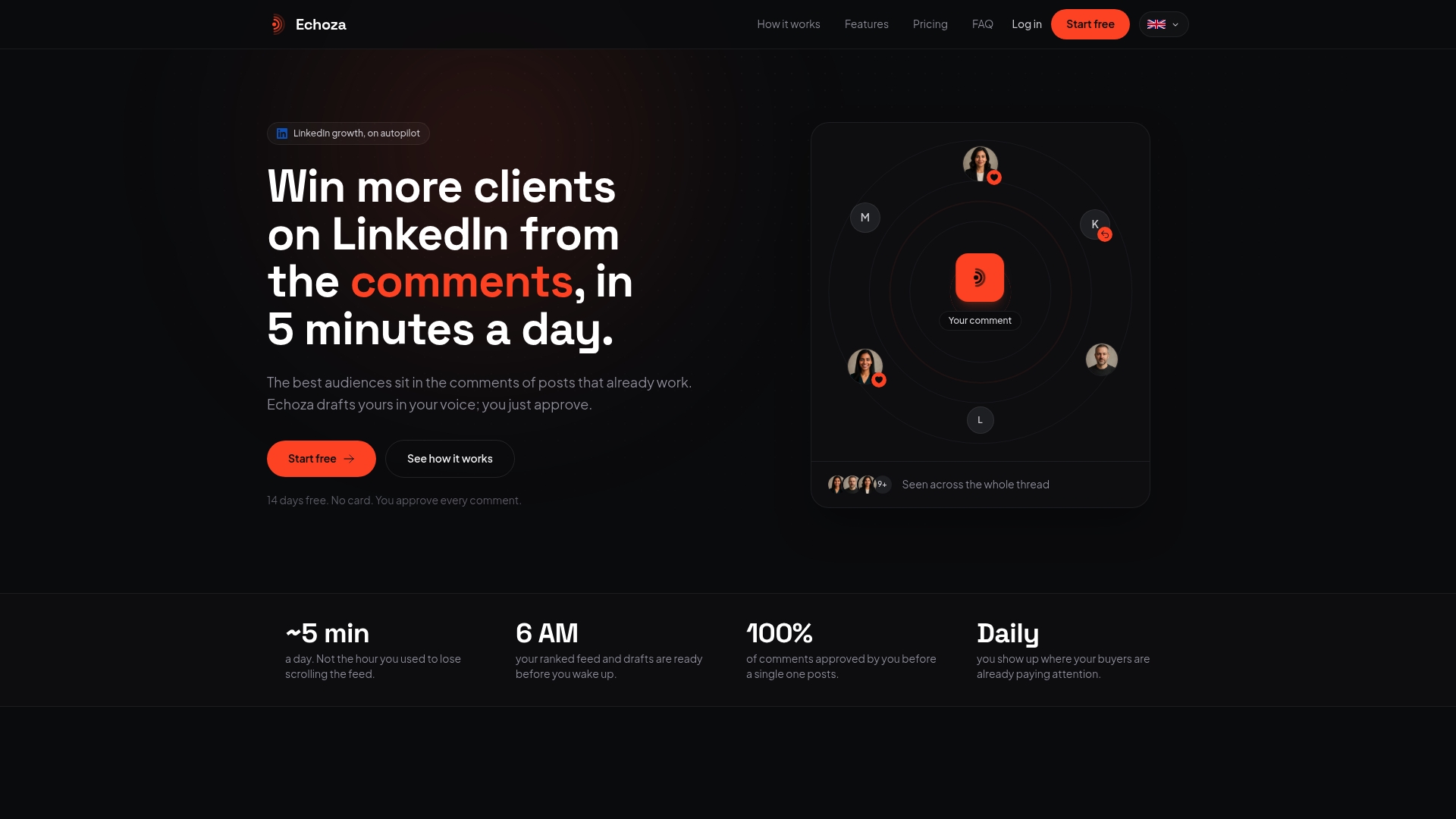
Echoza drafts comments in your unique voice and places you inside the high-reach conversations your target audience is already engaged in. Every comment goes through your approval before it posts, so you stay in control of your tone and message. Users report measurable increases in profile views and direct client outreach after using Echoza consistently. If you want to win more clients through LinkedIn comments without spending hours in your feed every day, Echoza is the tool built for exactly that outcome.
FAQ
What is LinkedIn's Depth Score?
LinkedIn's Depth Score is an algorithm metric that measures conversation quality and dwell time on a post. Posts with rich, extended comment threads score higher and receive broader distribution than posts with only quick reactions.
How often should I post on LinkedIn for the best engagement?
Posting 3–4 times per week is the optimal frequency for most professionals. Posting more often can split your audience's attention and reduce the reach of each individual post.
Does commenting on others' posts actually help my own reach?
Yes. Outbound commenting generates up to 15 times more reach than passive posting by placing your name and insights inside conversations your target audience is already reading.
Should I put links in my LinkedIn posts?
Place external links in the first comment, not the post body. LinkedIn's algorithm reduces the organic reach of posts that direct users off the platform.
How do I get more comments on my LinkedIn posts?
End every post with a specific, opinion-inviting question rather than a vague call to action. Specific questions give readers a clear, low-effort reason to respond and generate longer, higher-quality comment threads.